
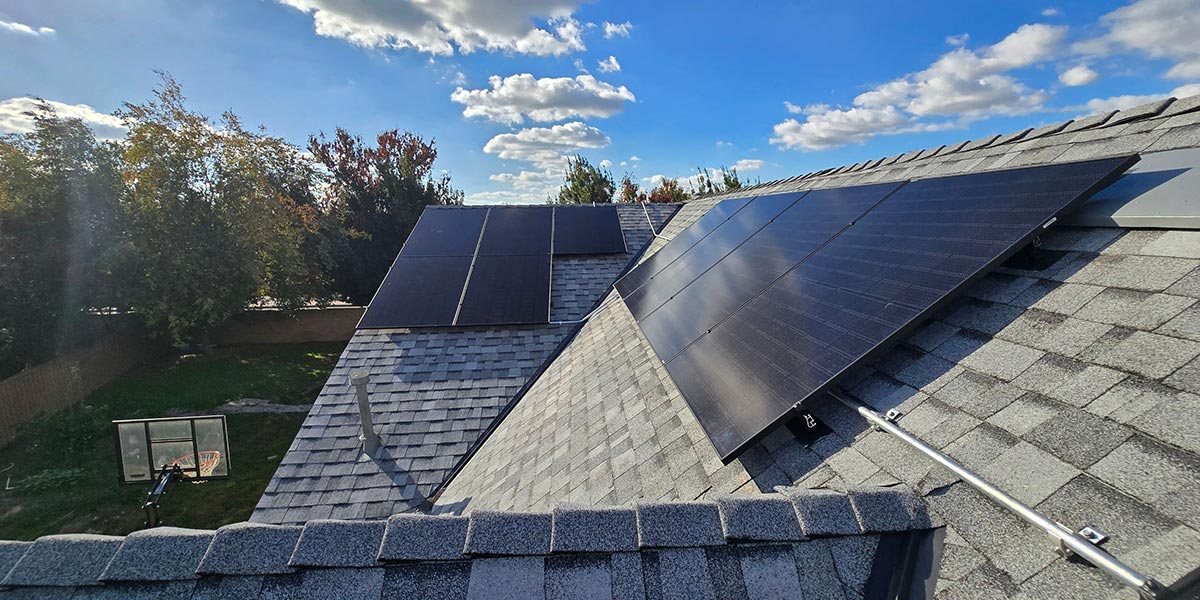
Yes, Solar Is Still Worth It for Savings and Self-Sufficiency
If you’re a California homeowner considering solar in 2026, the financial incentives are still strong—just different from what they were a few years ago. Even though the federal 30% tax credit for homeowners has ended as of January 1, 2026, there are still powerful ways to save with solar, especially when you use a tax equity partner. Solar is still worth the investment if you set it up correctly and choose a battery storage system to maximize the benefits. Supreme Solar & Electric can help.
Let’s walk through what’s changed, what’s still available, and how homeowners are cutting their electric bills in half from day one.
How Has the Solar Tax Credit Changed in 2026?
Up until the end of 2025, homeowners could claim a 30% federal tax credit directly. But starting January 1, 2026, that tax credit has sunset for residential homeowners.
That doesn’t mean the opportunity is gone. Instead, most solar projects now use tax equity partnerships to access those same incentives.
How Tax Equity Partnerships Work
Tax equity partners—usually financial institutions or solar developers—take the tax credit on behalf of the homeowner. In return, they reduce the system cost or offer a lower monthly payment.
This structure allows homeowners to still benefit from the credit indirectly, regardless of when they start. The partner monetizes the credit up front, making solar more affordable from day one.
ROI: Still 3.5 to 5 Years with the Right Setup
With today’s high electricity rates and well-structured financing, most solar and battery systems in California see a return on investment in 3.5 to 5 years. In some cases, it’s even faster if you:
- Maximize south or southwest-facing roofs
- Include battery storage
- Pair your system with time-of-use optimization
Financing Solar in 2026: $0 Down, Immediate Savings
Most of our customers finance their systems with no upfront cost, and instead lock in a fixed monthly payment that’s about 50% lower than their current utility bill.
A typical PG&E household spending $450 per month can switch to solar for around $200 to $225 per month with a properly sized system and battery.
Electric Rates Keep Climbing
Rates in California are at historic highs—and they keep rising. PG&E and Southern California Edison have increased rates repeatedly over the last five years. Even households enrolled in the CARE discount program are still paying more than the national average.
This is why the financial benefit of solar is stronger than ever. The more rates rise, the more you save with solar.
NEM 3.0 and Battery Pairing: A Smarter Strategy
The Net Billing Tariff (NEM 3.0) went into effect in April 2023 and fundamentally changed how solar systems interact with the grid. Under NEM 3.0:
- You are paid much less for the solar you export to the grid
- Export rates fluctuate by time of day and month
- Battery storage is critical to maximize ROI
But this change isn’t all bad. In fact, the strategy has just shifted.
Solar Still Pays Off—If You Store Your Power
Because electricity rates are higher in 2026 and most customers consume what they produce, your savings remain just as strong. In fact, many of our customers use 95% or more of their solar energy on-site, keeping export losses to a minimum.
And for those rare times you do export during peak events, you can earn up to $2 per kilowatt-hour depending on the time and season.
Products That Qualify for Additional Incentives
Under the new federal guidelines (Big Beautiful Bill), systems must use non-FEOC (Foreign Entity of Concern) equipment to qualify for tax equity partner incentives.
That includes avoiding panels, batteries, or inverters made in countries like China. The good news is there are high-quality American-made and eligible products available:
- Tesla Powerwall 3 (Made in California)
- SolarEdge inverters
- Enphase microinverters and batteries
- Racking from IronRidge and Unirac
These systems not only qualify for the remaining incentives, but also deliver top-tier reliability and performance under California’s intense sun conditions.
What About My TrueUp Bill?
Your utility no longer operates on a 12-month billing cycle. Under NEM 3.0, you’ll receive monthly statements showing:
- How much energy you used
- How much you exported to the grid
- What your export credits were worth
- Any remaining charges owed
If you have credits, they roll over to the next month. If you owe a balance, you pay it that month. Because most of your energy is being stored and used on-site, your TrueUp bill is much smaller than under NEM 1.0 or 2.0.
Solar Still Makes Sense
Here’s why going solar in 2026 is still a smart financial move:
- No money down, and up to 50% savings from day one
- Federal tax credit still available through a tax equity partner
- High electricity rates mean bigger monthly savings
- Advanced batteries allow homeowners to use nearly all their own energy
- Select products qualify for additional rebates and incentives
- Return on investment in 3.5 to 5 years
Switch to Solar in Palm Desert with Supreme Solar and Electric
At Supreme Solar and Electric, our Palm Desert solar team specializes in custom solar and battery systems using tax equity financing and qualified American-made products.
We’ll walk you through:
- Your savings potential
- Available incentives
- Battery sizing for your home
- System cost and financing options
Whether you’re in PG&E or SCE territory, we can help you build the right system for your home and budget.
Call Supreme Solar and Electric today to learn how you can benefit from solar energy in Palm Desert.