
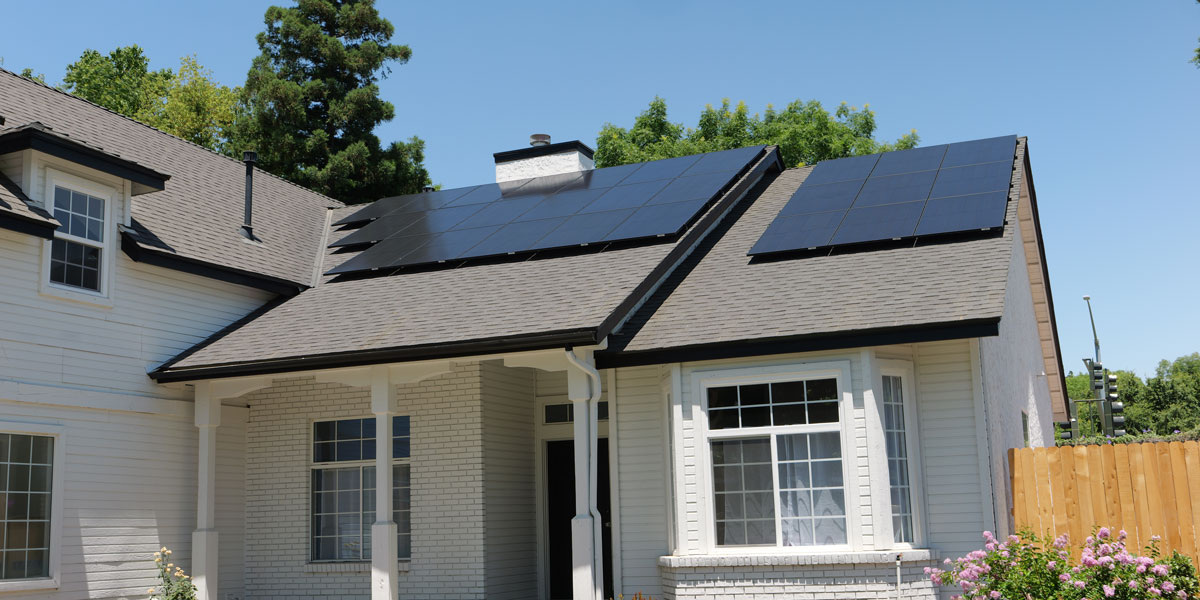
Going solar in Fresno is one of the smartest financial moves a homeowner can make in 2026. PG&E rates are some of the highest in the country. Electricity prices continue to climb. And with proper system design, most homeowners can reduce their energy costs by around 50 percent while cutting grid usage to less than 5 percent.
So, the question is not whether solar makes sense. The real question is whether the system is designed correctly. The biggest risks in 2026 are not about going solar. The biggest risks are about installing the wrong system.
Trust Supreme Solar to walk you through the most common mistakes homeowners make when switching to solar in Fresno and how to avoid them.
Mistake 1: Installing a Solar System That Is Too Small
This is the most common issue we see: A homeowner installs solar expecting their electric bill to disappear, but at the end of the year they still owe PG&E money. When we dig into it, the system was sized too conservatively.
Under today’s net billing structure, you cannot size a system the way we did five years ago.
In the past, many systems were sized to offset 100 percent of usage. That worked under older net metering programs. It does not work well in NEM 3.0. In 2026, a properly designed system in Fresno should typically offset 120 to 130 percent of annual usage.
This is because electricity usage is not flat throughout the year.
In Fresno:
• Summer usage spikes dramatically due to air conditioning
• Winter production drops due to shorter days
• Spring production is high while usage is low
• Lifestyle usage often increases after going solar
If you size too tightly to 100 percent, you leave no room for seasonal swings or future growth. That means you will still buy power from PG&E at 45 cents per kilowatt hour or more. A slightly larger system often creates a much better return on investment. The risk is not going slightly larger. The risk is going too small.
Mistake 2: Under Sizing the Battery
In 2026, battery sizing is just as important as solar panel system sizing. A common mistake is installing a strong solar system but pairing it with a battery that is too small for the home’s consumption.
The risks you encounter if your solar battery is undersized include:
- During the day, your solar system produces excess power. The home uses what it needs first. The battery charges next. But if the battery is small, it fills quickly. Once full, excess production gets exported to the grid. Under NEM 3.0, export credits are low.
- At night, your home still needs power, especially in the summer when AC runs into the evening. But if the battery capacity is not large enough, it drains early. Once empty, the home pulls expensive electricity from PG&E. So, you export cheap and buy back expensive, which is the opposite of being smart with your solar goals.
For these reasons, in Fresno we typically size batteries at a ratio of about 2.5 to 3 kilowatt hours of usable storage for every 1 kilowatt of solar installed.
For example:
- 10-kilowatt solar system
- 25 to 30 kilowatt hours of usable battery storage
That proportional sizing keeps grid reliance under 5 percent in most properly designed homes.
The biggest risk is not having a battery. It is having a battery that is too small.
Mistake 3: Not Designing for an Electric Vehicle
Electric vehicles are becoming standard in California. If you know you are likely to buy an EV in the next one to three years, your system should be designed for it today. An EV can add between 3,000 and 5,000 kilowatt hours per year depending on commute distance and charging habits. If the system was not sized for that future load, you may end up back on the grid paying retail rates for vehicle charging.
Planning in this way dramatically changes your savings model. It is much more cost effective to oversize the solar system during the initial install than to try to add more panels later.
When we design systems in Fresno, we always ask: Are you considering an EV soon? If the answer is yes, it should be built into the original calculation.
Mistake 4: Choosing the Wrong Ownership Structure
Another mistake we see is not fully evaluating ownership options. Many homeowners are presented with a PPA, or Power Purchase Agreement, and assume that is the best path because it advertises low or zero upfront cost. PPAs can make sense in some scenarios.
But in 2026, it is critical to compare:
- Standard PPA
- Prepaid PPA
- Cash purchase
- Traditional financing
Ownership often creates stronger long term returns because you are building equity in the system instead of paying for power indefinitely. With prepaid structures, there can be a middle ground where a homeowner reduces the long-term cost of energy significantly while monetizing incentives efficiently. The key mistake is not comparing the options side by side. The goal should be finding the fastest and most cost-effective path to ownership, not just the lowest upfront payment.
Mistake 5: Ignoring Lifestyle and Future Load Changes
Another subtle but important mistake is designing a system based only on past usage. Usage changes over time, with changes to your home, when lifestyle changes or home dynamics change.
For example:
- Adding a pool
- Converting a gas water heater to electric
- Installing a heat pump HVAC system
- Working from home more often
- Growing family size
Even something as simple as running AC lower because electricity is cheaper can increase usage significantly. If the system is designed only around past consumption and does not account for realistic future behavior, it can become undersized within a year or two. A well-designed solar system should anticipate growth. It is far better to plan slightly ahead than to fall behind.
Mistake 6: Focusing Only on Panel Count Instead of System Design
Many homeowners ask, how many panels do I need, but this may be the wrong question.
The right question is: How much energy do I need to produce annually, and how does that production interact with my battery and my utility rate structure?
Panel count alone does not tell you:
- Annual production
- Time of production
- Battery charge and discharge behavior
- Grid reliance percentage
- Seasonal swings
A 12-kilowatt system on a shaded north facing roof is not the same as a 12-kilowatt system on a clean south facing roof. Proper modeling matters. The risk is choosing based on panel count or price per panel rather than total system performance.
Mistake 7: Not Understanding PG&E Rate Structures
In Fresno, PG&E’s blended rates are around 45 cents per kilowatt hour, sometimes higher depending on time of use and season. Savings are calculated against what you would have paid the utility.
If someone does not understand how summer peak pricing works, time of use rates fluctuate, CARE program discounts impact ROI, and export credits are valued, they may misunderstand the financial return. Solar savings come from replacing expensive retail electricity with lower cost self-produced power. The clearer the understanding of the utility structure, the clearer the value of solar.
Is There a Risk in Going Solar at All?
If a system is sized properly and paired with the right battery capacity, there is very little downside in Fresno. Electricity costs are high. Solar production in the Central Valley is strong. Return on investment is typically in the three-to-five-year range depending on roof conditions and usage. The biggest risk is not switching to solar but switching to solar incorrectly.
How to Avoid These Mistakes
To avoid these risks, homeowners should ensure:
- The system offsets 120 to 130 percent of realistic annual usage
- The battery is proportional to the solar size
- EV and future upgrades are accounted for
- Ownership structures are compared properly
- The design is based on production modeling, not panel count
Solar is not just equipment. It is system design.
Switching to Solar in Fresno Is Not Risky
Installing the wrong system is the mistake and the risk.
When solar and battery are sized correctly, most homeowners:
- Reduce electricity costs by about 50 percent
- Cut grid reliance to under 5 percent
- Protect themselves from future PG&E rate increases
- Gain backup power resilience
The mistake is not going solar. The mistake is treating it like a simple purchase instead of a long-term energy design decision. If you take the time to size it correctly from the beginning, solar in Fresno remains one of the strongest financial upgrades a homeowner can make in 2026. With help from Supreme Solar, you’ll build the right solar energy system and have adequate backup storage for years to come.