

When most people think about going solar, they picture panels mounted on their roof. But what if your roof is too shaded, too small, or you simply want another option? Can you install solar panels on a patio? The answer is yes, and in this blog, we’ll walk you through everything you need to know about using your patio for solar.
Whether you’re looking to add panels to an existing patio or you’re thinking about building a new solar patio structure from the ground up, this guide will help you understand your options, requirements, and what’s possible when it comes to patio-mounted solar.
Why Use Your Patio for Solar?
There are several good reasons to consider using a patio for your solar installation:
- Maximize space if your roof isn’t suitable
- Add functional shade for outdoor use
- Customize the design with materials and styles that fit your home
- Increase your property value with a dual-purpose structure
- Free up your roof for HVAC units, vents, or skylights
More importantly, a patio-mounted solar system still allows you to achieve the same energy production goals as a traditional roof-mounted system, as long as the structure is designed and built properly.
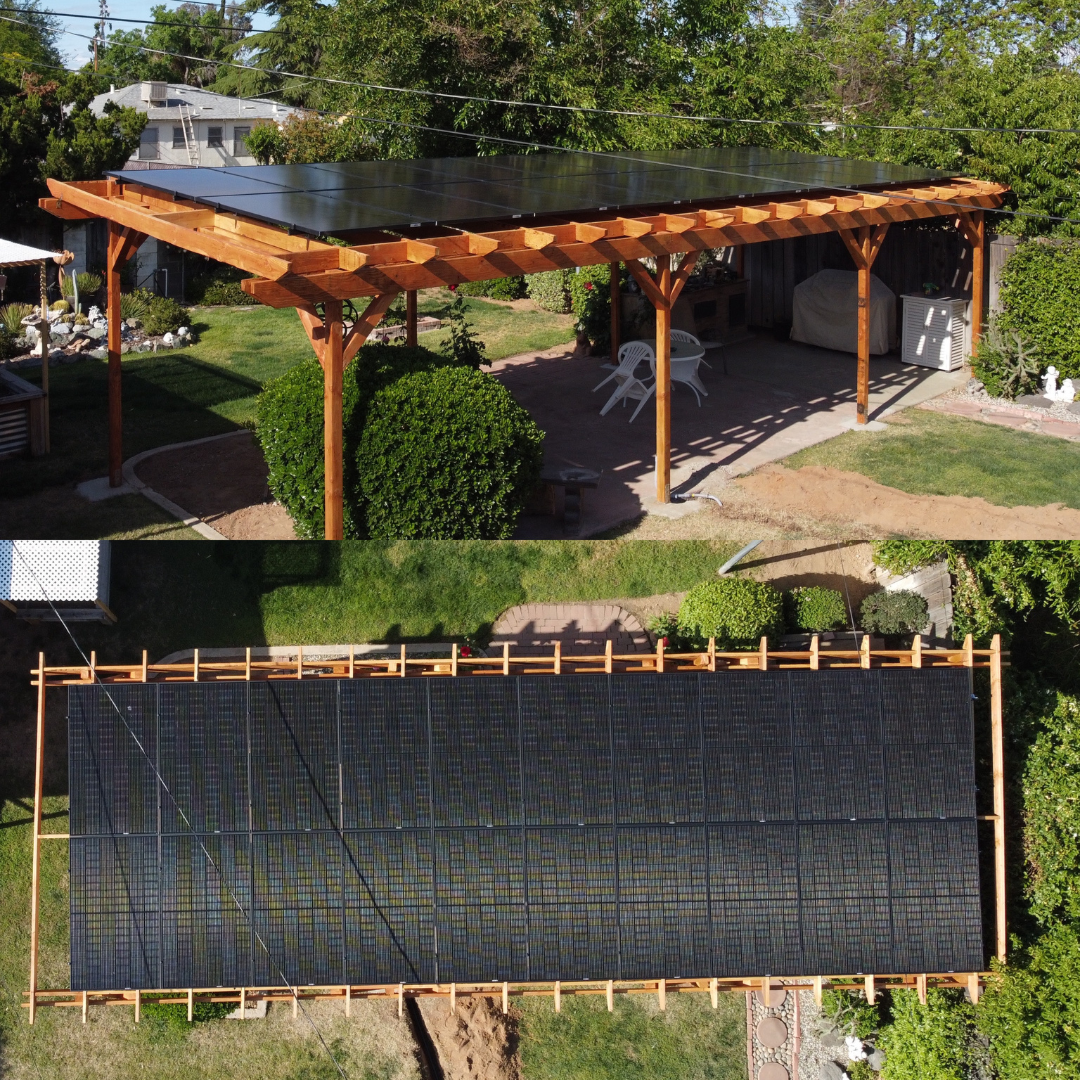
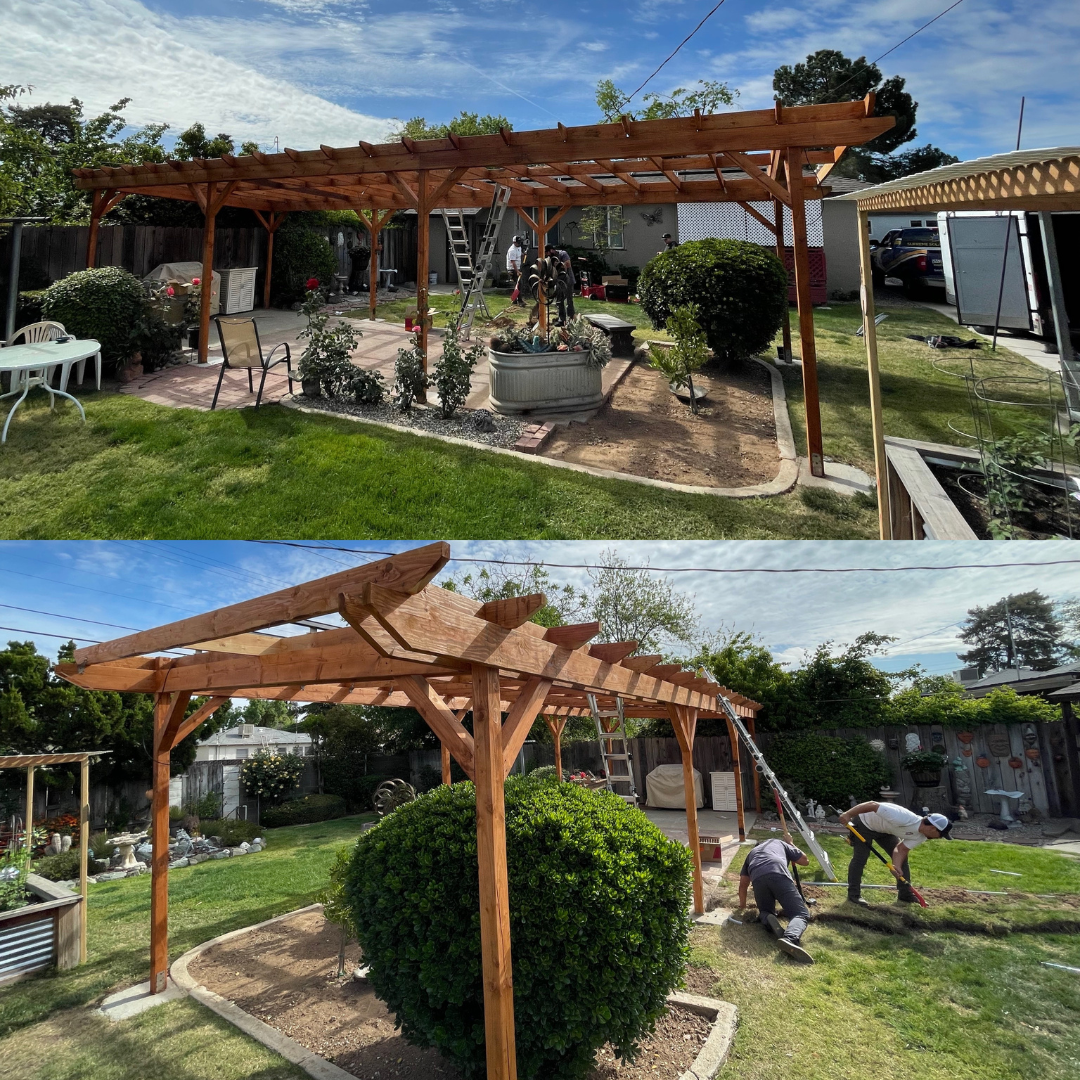
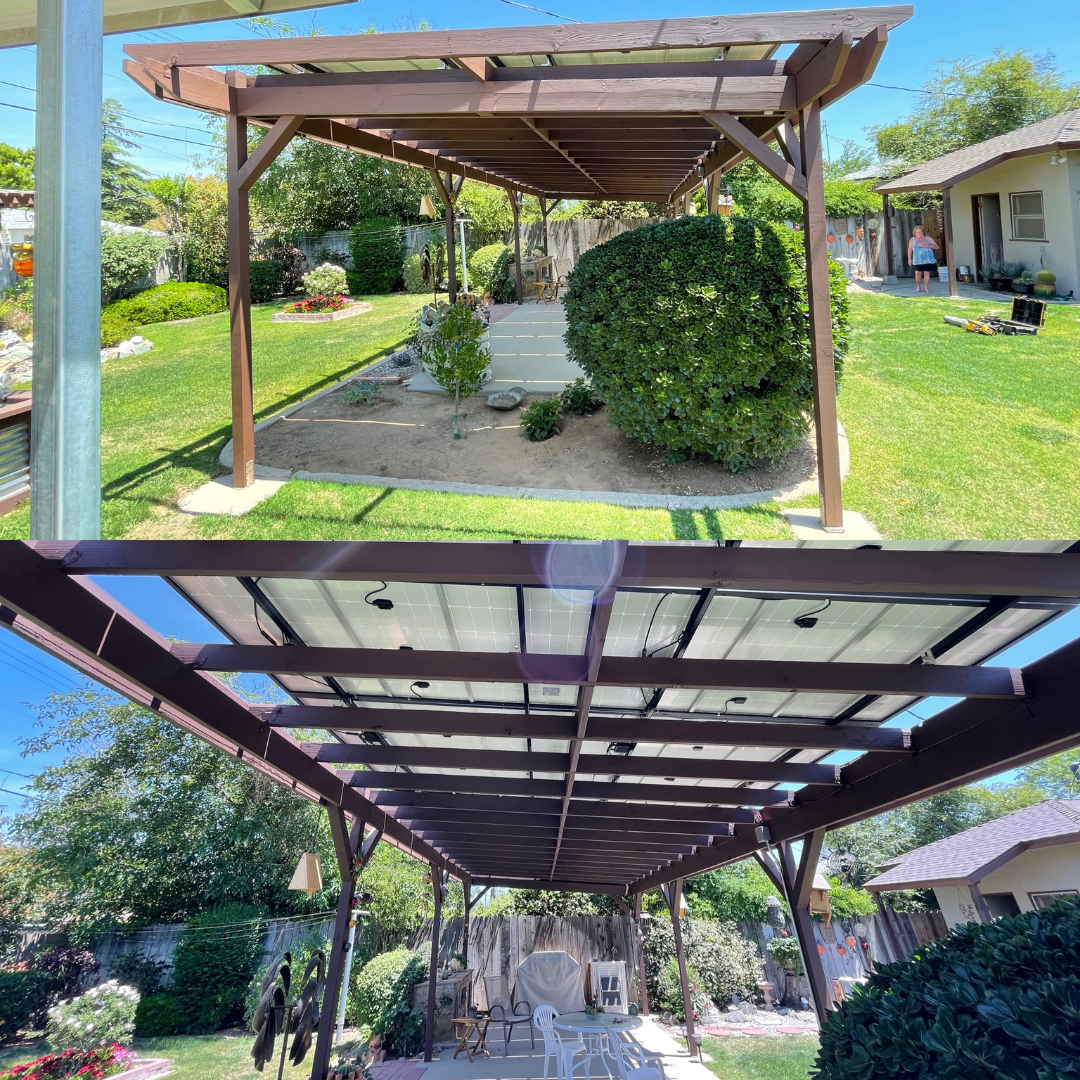
Option 1: Installing Solar on an Existing Patio Cover
If you already have a patio cover and are wondering whether you can use it for solar, here’s what you need to know.
1. Structural Soundness is Key
Your existing patio must be able to handle the additional weight and wind load of the solar panels. Most solar panels weigh about 40 pounds each, and that weight needs to be distributed across the rafters or beams. On top of that, when wind hits the panels, it can create uplift forces that your patio must be able to withstand.
Here’s what needs to be evaluated:
- Post size and spacing: Are you using 4x4s, 6x6s, or smaller posts? Wider, properly spaced posts offer more strength.
- Footings: Are the footings concrete? Are they deep enough? Ideally, footings should be at least 3.5 feet deep and 24 inches wide, depending on the structure and local codes.
- Beam and rafter strength: Are the 2x4s or 2x6s spaced too far apart? Can they support mounting brackets and solar hardware?
- Attachment points: You’ll need solid framing members to anchor the rails and panels.
If the patio isn’t built to these standards, it may need reinforcement before solar can be safely installed.
2. Fire and Electrical Safety
Because solar is an electrical system, everything mounted on your patio must meet fire safety standards and electrical code. The surface should not pose a risk of heat accumulation, overloading, or fire.
In many cases, that means:
- Using Class A fire-rated materials if required by your local jurisdiction
- Ensuring that there is clear conduit routing for wiring
- Having an approved path back to the main electrical panel
Your solar contractor should review all of this during a site evaluation and let you know if modifications are needed.
Option 2: Building a New Solar Patio Cover
If you’re planning to add a new patio cover to your home, designing it with solar in mind is a great idea. This allows you to optimize the structure for both aesthetics and functionality from the start.
1. Materials and Styles
There are multiple ways to build a solar-ready patio:
- Wood patios: Traditional timber-framed patios can support solar panels when built to proper structural specs. Common setups use 6×6 posts, 4×12 beams, and 2×6 rafters. These offer a warm, natural look that blends well with most homes.
- Steel or aluminum structures: Metal patios are becoming more popular for solar because of their durability and the ability to span wider distances without middle posts. You can often go 12 to 20 feet between posts with steel frames, depending on engineering.
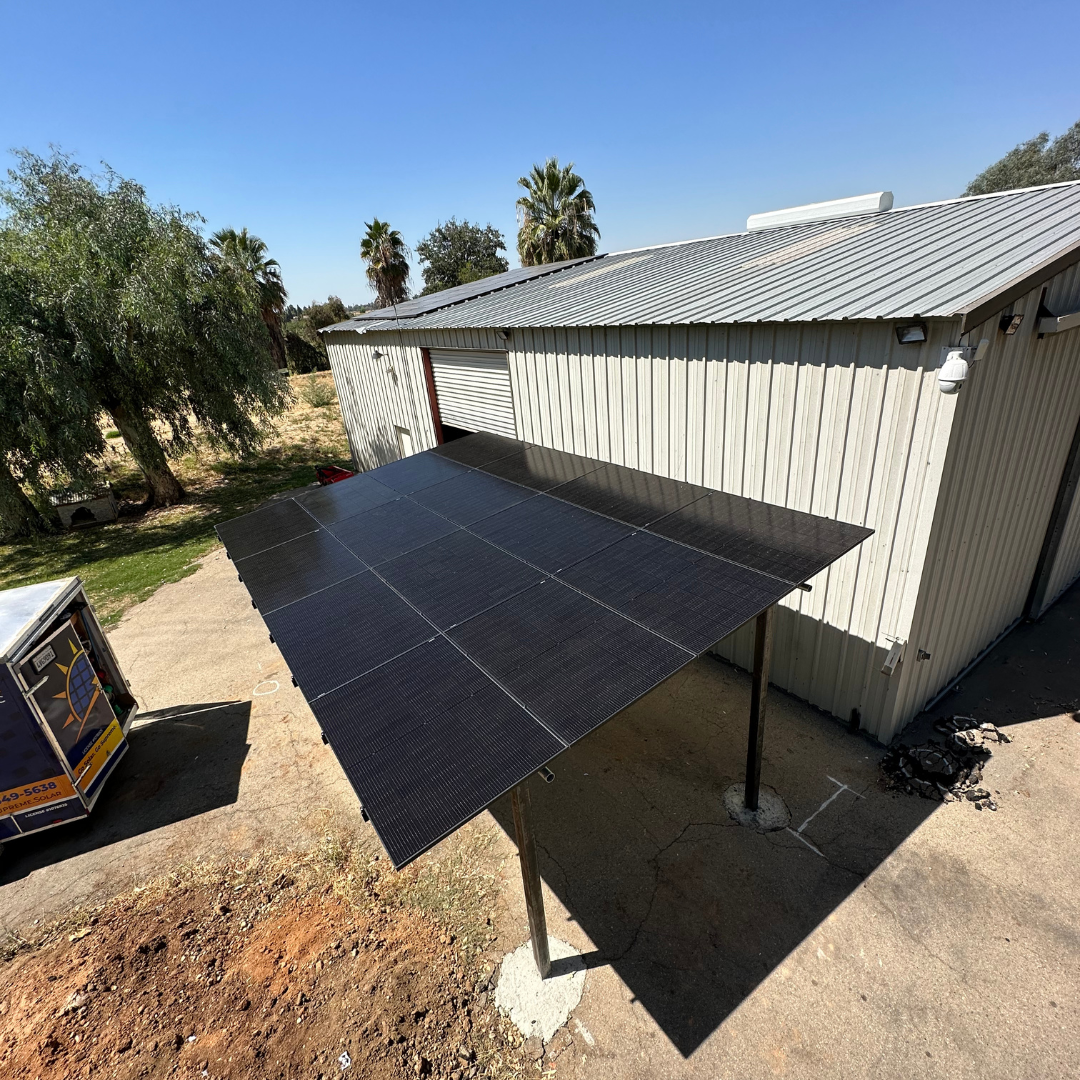
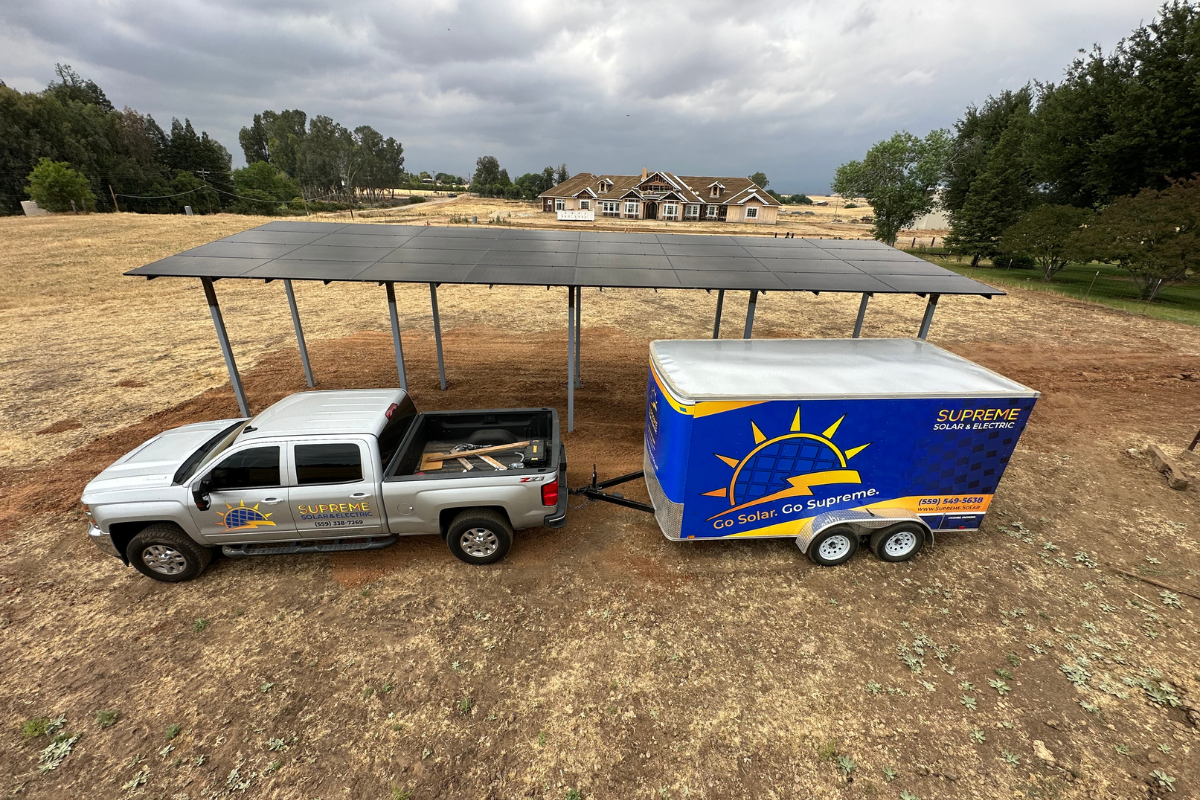
- RV or freestanding carport-style structures: These are commonly used for solar because they can be built anywhere in the yard and designed with wide roof slopes for optimal sun exposure.
- Custom pergolas or elevated ground mounts: You can even design a patio that’s partially open underneath (like a pergola) but topped with solar for shade and generation.
2. Engineering Considerations
When building a solar patio, here are the key structural elements that need to be addressed:
- Post spacing: Wood patios may need posts every 6 to 8 feet. Steel patios can span further without middle supports.
- Footings: These are often required to be at least 3.5 feet deep and 24 inches wide for stability.
- Rafter and purlin spacing: Solar mounting rails need consistent support. Using 2×6 or larger rafters, spaced 24 inches on center, is typical.
- Load calculations: Your structure needs to be engineered for the dead load (panel weight) and live load (wind or snow loads).
Your solar contractor will typically submit the structure for plan review and engineering approval before proceeding.
Setback and Zoning Requirements
In California, most jurisdictions have setback requirements for detached patio structures. These are designed to maintain safe spacing from property lines, ensure visibility, and prevent overcrowding.
Here’s what’s common:
- Side yard setback: Usually 5 feet from the property line
- Rear yard setback: Usually 10 to 20 feet, depending on city
- Height limits: Detached patio covers usually must be under 12 feet tall. Attached patio covers (connected to the house) may allow for 14 feet or more.
- Lot coverage limits: You may be limited in the total square footage of your backyard that can be covered by structures, depending on zoning.
It’s important to check with your local building department to confirm these requirements. Many contractors will pull the necessary permits and provide the structural calculations as part of the project.
Electrical Routing and Trenching
Once you have your structure, you’ll need to connect the solar system back to your home’s electrical panel.
There are two main options:
- Trench from patio to main panel: This is the most common method. A trench is dug (usually 18 to 24 inches deep), and conduit is run underground to the home’s main panel or backup system.
- Conduit along the home: If the patio is near the house, you may be able to run conduit along the exterior of the home, keeping the trench shorter or eliminating it.
Either way, your electrician must follow code requirements for conduit type, burial depth, and labeling. You’ll also need a permit and inspection.
Should You Mount Solar on a Patio Instead of a Roof?
There are several reasons homeowners choose a patio solar install instead of a traditional roof-mounted one:
- Roof has limited usable space or shading
- New roof is being installed, and they want to avoid roof penetrations
- Desire for shaded outdoor area
- Looking for a unique or aesthetic solar solution
- Already planning a backyard renovation or new structure
The key is making sure the structure is safe, approved, and built to last. When done properly, a solar patio cover is just as effective as a roof-mounted system and may even provide extra benefits like outdoor living space or vehicle protection.
Final Thoughts: Is a Solar Patio Right for You?
If you’ve been thinking about solar but don’t want to—or can’t—put it on your roof, a patio-mounted system might be the perfect option. Whether you’re retrofitting an existing structure or building something new, solar patios offer flexibility, functionality, and financial benefits.
Here’s what to keep in mind:
- Always check the structural integrity before mounting solar on an existing patio
- Work with a licensed contractor to evaluate the site and pull necessary permits
- Consider steel if you want wider spans or a more modern look
- Plan for trenching or conduit routing early
- Check your local setbacks, zoning, and height restrictions
At Supreme Solar and Electric, we design and build custom solar patio systems across Fresno, Clovis, and Palm Desert. We handle everything in-house—from engineering to permits to installation—and can help you design a structure that’s both beautiful and powerful.
Ready to Build Your Solar Patio?
If you’re interested in seeing what a custom solar patio could look like on your property, reach out to us for a free consultation. We’ll walk your property, evaluate your electrical panel, and show you real examples of solar patios we’ve built nearby.
Call Supreme Solar and Electric today or schedule a site visit to get started. Let’s turn your backyard into a powerhouse.