
Fresno Solar Battery Experts at Supreme Solar Explain
When the power goes out, your solar battery becomes your home’s lifeline. But not all appliances are created equal when it comes to energy consumption — and backing up the wrong ones can drain your battery long before the sun rises to replenish it.
The quick answer: During a power outage, homeowners should prioritize backing up refrigerators, medical devices, internet routers, lighting, and limited HVAC while avoiding high-draw appliances such as electric dryers, ovens, and pool pumps that can drain a battery in hours.
Let our Fresno solar battery experts at Supreme Solar & Electric tell you why!
Critical VS Non-Essential Appliances During Power Outages
When planning your backup strategy, the first thing to consider is the difference between critical appliances (needs) and comfort appliances (wants).
- Critical appliances are those that protect your food, safety, communication, and basic comfort.
- Comfort appliances are nice to have but can deplete your battery quickly — and often aren’t essential during a short-term outage.
In California, outages caused by Public Safety Power Shutoffs (PSPS), transformer failures, or grid overload can last anywhere from a few hours to several days. If your solar system is designed properly and includes battery storage, your home can keep running — but it all depends on what you choose to power. Battery capacity is measured in kilowatt-hours (kWh), and high-wattage appliances can use more energy in one hour than critical devices use all day.
Why 120-Volt Circuits Are Ideal for Backup
Most critical household appliances run on standard 120-volt circuits, which are the most battery-efficient to back up. These smaller circuits allow your battery to operate in “eco mode,” prioritizing essential usage while reducing the risk of overloading and shutting down the entire backup system. High-powered 240-volt appliances (like air conditioners and electric ovens) can drain even a large battery bank in just a few hours, especially if your solar isn’t producing during cloudy weather or nighttime.
Backing up your 120-volt circuits first ensures that you maximize the lifespan of your stored energy and stretch your backup power over multiple days — rather than hours.
Top Appliances to Back Up During a Power Outage
Below is a breakdown of the most important appliances and loads to back up. These are mostly low-draw 120-volt circuits that provide the most safety and comfort per unit of stored energy.
- Why it matters: Keeps your food from spoiling, especially during multi-day outages.
- Tip: Most Energy Star refrigerators draw 100–150 watts while running, which is very manageable for a battery.
- Why it matters: Safety and access. If you need to leave your home during an outage, your garage shouldn’t be a barrier.
- Tip: This is typically a low-draw circuit and draws minimal standby power.
- Why it matters: Communication. Your phone may still have LTE, but internet access for updates, work-from-home, or school is essential.
- Tip: Routers and modems draw between 15–30 watts on average.
- Why it matters: Comfort and visibility, especially at night.
- Tip: Focus on LED lighting in essential areas, which are “low-draw” and battery-friendly— kitchen, bathroom, hallway, and bedrooms.
5. Outlets for Charging (Phones, Laptops, Medical Devices)
- Why it matters: Keeping devices charged helps you stay connected, access emergency info, or power CPAP machines or oxygen concentrators.
- Tip: Back up select outlets, especially in bedrooms and common areas, not the entire house.
- Why it matters: For rural homes, having running water is a critical need.
- Tip: Well pumps vary in wattage — consult your installer to verify the size and whether your battery can support it.
7. Microwave / Toaster Oven (Optional)
- Why it matters: Gives you a way to prepare simple food. These are optional but nice to have if your battery is large enough.
- Tip: Use sparingly — they can spike usage over 1,000 watts.
What Appliances NOT to Back Up — Unless You Have a Large System
- Why to avoid: Even small AC units can spike over 3,000 watts on startup. Central systems can draw 4,000–6,000+ watts.
- When it’s okay: If you have two or more solar inverters and a battery bank over 25 kWh, you may be able to back up one small or high-efficiency AC unit But it’s not recommended for most homes.
- Why to avoid: EV chargers draw masses of power — usually between 7–12 kW. This will deplete a typical home battery in less than 2 hours.
- Alternative: Pre-charge your EV before the storm or outage if you’re on alert.
3. Electric Dryer, Electric Oven, or Hot Water Heater
- Why to avoid: These are luxury loads during an outage. You can survive a few days without laundry or baking.
- Workaround: Use a gas stove (if available) or prep meals that don’t require cooking.
Is Whole Home Back Realistic for Power Outages?
Some homeowners in California opt for whole-home backup, meaning every circuit in the home is energized during an outage. This is only feasible if:
- You have a large battery bank (3+ batteries totaling over 40–60 kWh).
- Your solar system is large enough to recharge that battery daily.
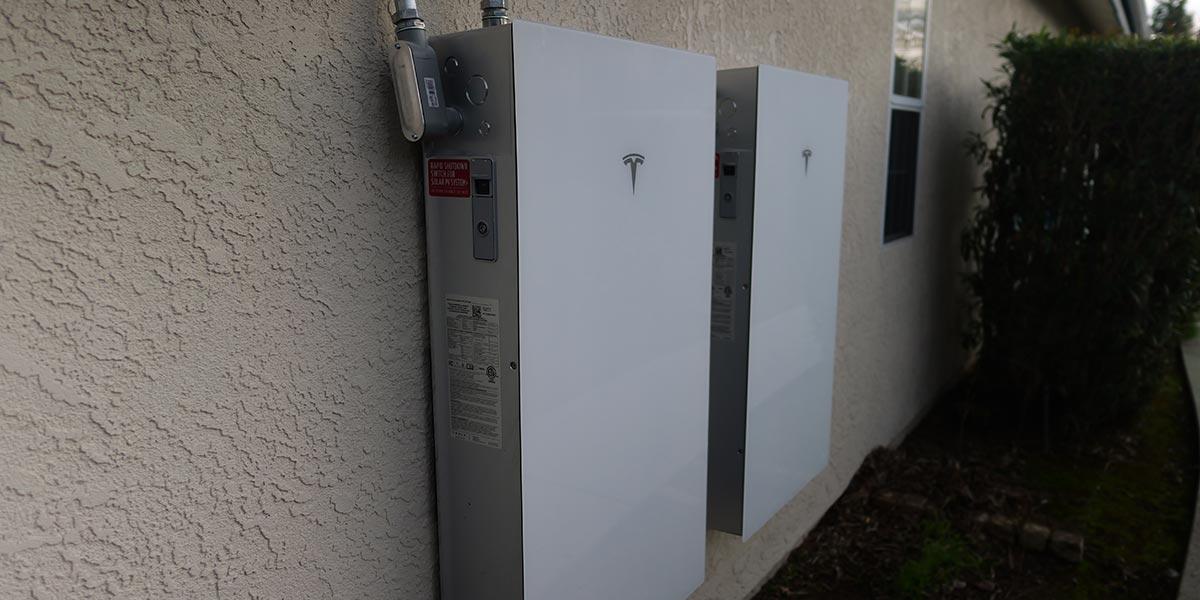
- You use a system like the Tesla Powerwall 3, which offers 11.5 kW output and scales to 4 units, giving up to 54 kWh of backup power.
- You have a backup switch or gateway that supports whole-home switchover.
Even then, most of these systems are overengineered for rare outages. A better approach is critical-load backup that targets the essentials, stretches your battery further, and keeps costs down. The right backup system isn’t about guessing; it’s about matching your real energy use to your available storage and solar production.
The Role of System Sizing and Load Calculations
Battery backup design isn’t just about picking circuits — it’s about knowing your energy draw and balancing it with available storage.
At Supreme Solar and Electric, we start by doing a full load calculation for your home. This helps us understand:
- How much power each appliance draws
- The typical runtime in an outage
- What your battery capacity can realistically support
- How quickly your solar panels can recharge the battery the next day
This allows us to design a resilient system that doesn’t leave you in the dark — and doesn’t overload your battery during critical moments.
Battery Sizing: Getting It Right from Day One
We recommend sizing your battery so that:
- Your home uses 95% or more of its own energy during an outage.
- The battery can last overnight (8–12 hours) without solar.
- Your system charges back to full by midday the next day.
In 2026, with utilities like PG&E and SCE facing frequent outages and rate hikes, California homeowners are choosing battery-first solar systems that prioritize resilience and savings.
Bonus Tip: Use Smart Monitoring to Stay in Control
Systems like the Tesla app or SolarEdge monitoring give you real-time insight into:
- Battery state of charge
- Solar production
- Which circuits are being used
- Grid availability
This lets you optimize your usage during an outage, manually turn off unneeded loads, and stretch your battery even further.
Back Up Essentials, Then Expand Your Backup Battery System
Backing up your home in a power outage doesn’t have to be all or nothing. Start with the critical loads — fridge, lights, Wi-Fi, outlets, garage — and if your budget and system allow, expand to support HVAC or other larger appliances.
By being smart about what you back up, you can make your battery last longer, reduce stress during emergencies, and protect your most essential comforts.
At Supreme Solar and Electric, we help homeowners across California design right-sized systems with reliable backup power — and we’ll help you make the right call on what to power and when.
Ready to Build a Battery-Backed Solar System in Fresno? Call our Fresno Solar Experts
Talk to our Fresno solar battery installers to get a custom load calculation and backup design that works for your home and budget. We’ll walk you through everything — from product options to what to expect during an outage.
Call or message the Fresno solar battery storage experts at Supreme Solar today. Let’s keep the lights on, no matter what.