
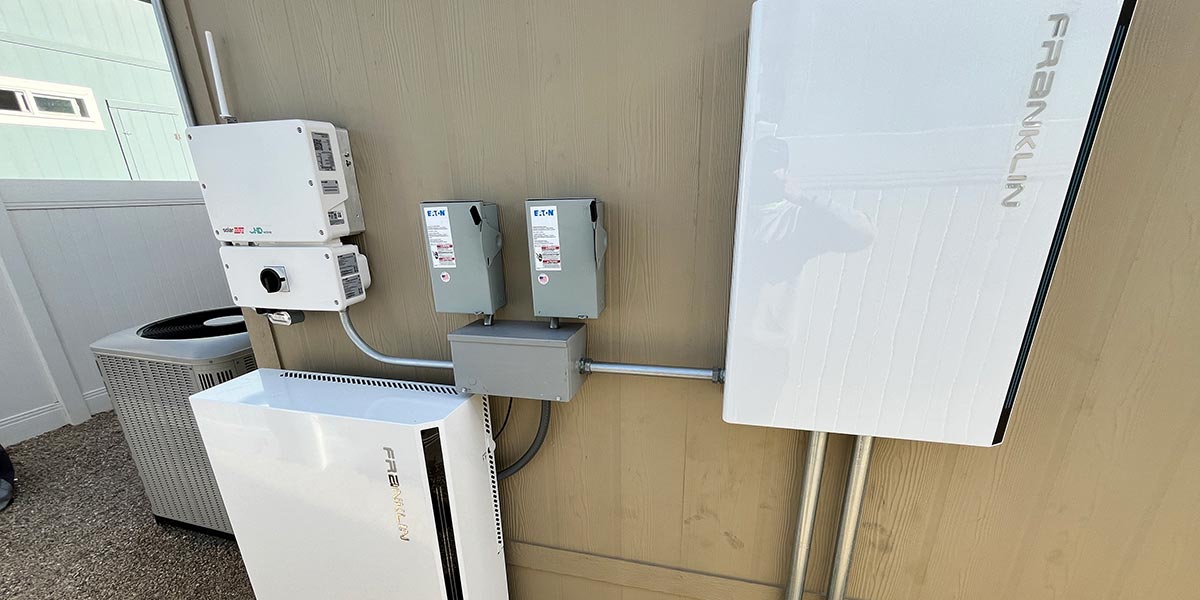
One of the most common questions homeowners ask when considering their residential solar energy production is: How do solar batteries actually save energy? At first glance, it seems like the solar panels are doing all the work. They are the equipment producing the electricity, so why are batteries such a big part of every solar proposal today? The answer comes down to how California’s utility programs changed and how homeowners are compensated for the extra power their solar systems produce.
Before 2023, most homeowners could install solar panels without batteries and still achieve excellent savings. Today, that strategy has changed significantly. Understanding why batteries became so important requires understanding what happened with California’s export rates and how solar systems operate under NEM 3.0, also known as Net Billing.
The Big Change That Happened in 2023
In April of 2023, California transitioned from NEM 2.0 to NEM 3.0. Prior to this change, homeowners received much higher credits for the excess electricity they exported to the grid. If your solar system produced more electricity than your home was using during the day, that extra electricity was sent to the utility grid and you received valuable credits that could later be used at night when your solar system was not producing. The grid essentially acted like a giant battery.
Under NEM 3.0, those export credits changed dramatically. Instead of receiving near retail value for exported electricity, homeowners now receive credits based on a complex export rate calculator that changes every hour of every day throughout the year. During much of the year, especially in the spring when solar production is at its highest across California, export rates are extremely low. In many cases, those export credits can be only a few cents per kilowatt hour. While rates fluctuate throughout the year, the average export value is typically somewhere between 4 and 8 cents per kilowatt hour.
At the same time, homeowners may be purchasing electricity from the utility for 40 to 50 cents per kilowatt hour during peak periods. That creates a major problem. You are selling power to the utility at a very low value and then buying it back later at a much higher price. That is where batteries come in.
How Solar Batteries Save Energy Costs
Solar batteries save money by storing excess solar production instead of allowing it to be exported to the grid. Think of it this way. Every kilowatt hour your solar system produces has value. If you immediately send that power to the grid, you may only receive a few cents in return. If you store that same power in a battery and use it later that evening, you avoid purchasing electricity from the utility at full retail rates. The battery allows you to keep your energy on site. Instead of selling low and buying high, you are producing your own electricity and using it when you need it. That is the core reason batteries have become so valuable under NEM 3.0.
Understanding Solar Energy Priorities
A properly designed solar and battery system follows a specific order of operations. The first priority is always the home. When your solar system is producing electricity, it will first power whatever appliances and loads are currently running, including.
- Air conditioning
- Refrigerators
- Lights
- Pool equipment
- Electronics
- Electric vehicle chargers
The solar power is used immediately by the home whenever possible. The second priority is the battery. If the solar system is producing more power than the home is currently consuming, the excess energy is sent to the battery for storage. The battery begins charging and storing that energy for later use. The final priority is the utility grid.
Only after the home has been powered and the battery has been fully charged will any remaining electricity be exported to the utility. This order is intentional because storing the power provides significantly more financial value than exporting it.
Why Battery Sizing Matters
One of the biggest mistakes homeowners can make is installing a battery that is too small for the solar system. A battery can only store a certain amount of energy. Once it reaches 100 percent capacity, it cannot accept any additional solar production. When that happens, any extra solar energy being produced is automatically exported to the grid. That means you lose the opportunity to store that energy for later use.
This is why battery sizing is so important. The goal is to capture as much excess solar production as possible so it can be used later in the evening when the solar system is no longer producing electricity. If the battery fills too early in the day, valuable energy is lost to low value export credits. If the battery is sized correctly, it can continue storing excess production throughout the day and provide power well into the evening.
The Goal Under NEM 3.0
Under older net metering programs, the goal was often to maximize exports. Today, the strategy is completely different. The goal is to minimize grid dependence. In other words, the objective is to touch the grid as little as possible.
The most successful solar and battery systems are designed to keep utility usage extremely low. In our experience, a well designed NEM 3.0 system can often reduce utility dependence to around 10 percent or less of total annual energy usage. That means roughly 90 percent or more of the home’s electricity needs are being covered by the solar and battery system. That is where the real savings come from.
How Do Batteries Help at Night?
The biggest benefit of a battery becomes obvious after sunset. Once the sun goes down, solar panels stop producing electricity. Without a battery, the home immediately begins pulling power from the utility. Under California’s time of use rate schedules, these evening hours are often the most expensive, when homeowners are:
- Cooking dinner
- Running appliances
- Watching television
- Charging devices
- Running air conditioning
Without battery storage, all of that power comes from the utility. With battery storage, the home can continue running on energy that was produced and stored earlier that day. This allows homeowners to avoid many of the most expensive utility charges.
How Batteries Help During Peak Utility Hours
Most California utilities have peak pricing periods. These are the hours when electricity costs the most. For many homeowners, those peak periods occur between 4 PM and 9 PM. These are also the exact hours when solar production is declining or completely unavailable. Without a battery, homeowners are forced to buy electricity during the most expensive part of the day. With a battery, stored solar energy can be used instead. This significantly reduces the amount of electricity purchased during peak periods and helps lower monthly utility bills.
What About Cloudy Days?
No system eliminates grid usage entirely. There will always be days when solar production is lower than expected. Cloudy weather, storms, smoke, and seasonal changes can all reduce production. During those periods, the battery may not fully charge. When that happens, the home may need to pull additional power from the utility. That is completely normal. The goal is not necessarily to eliminate grid usage entirely but to reduce it as much as possible. For most homeowners, achieving less than 10 percent annual grid usage represents excellent performance.
Additional Benefits to Solar Batteries Beyond Savings
While energy savings are the primary reason homeowners install batteries, there are additional benefits as well. Battery systems can provide backup power during outages when paired with the appropriate backup equipment. They can help stabilize energy usage. They provide greater energy independence. They allow homeowners to control when and how their electricity is used. Most importantly, they provide protection against future utility rate increases. As electricity rates continue to rise, the value of storing and using your own energy becomes even greater.
Why Nearly Every New Solar System Includes Batteries
This is ultimately why batteries have become standard equipment for new solar installations.
The economics of exporting power have changed now that the effective strategy is no longer to send power to the utility and rely on credits. The most effective strategy is to store your excess solar production and use it yourself.
A properly sized battery allows homeowners to:
- Capture excess solar production
- Avoid expensive evening utility rates
- Reduce grid dependence
- Improve overall savings
- Increase energy independence
When designed correctly, the battery becomes one of the most important components of the entire solar system.
So How Do Solar Batteries Save Energy?
They save energy costs by storing excess solar production that would otherwise be exported to the grid for low value credits. Instead of selling electricity for a few cents and buying it back later for much higher prices, homeowners keep that energy on site and use it when they need it most. Under NEM 3.0, batteries are no longer just a backup power solution. They are a critical part of the savings strategy.
The goal today is simple: Produce your own electricity, store your excess energy, and use that energy at night. (And minimize how much power you buy from the utility.) That is how solar batteries save energy and why they have become an essential part of modern solar systems throughout California.
For solar batteries and whole home solar systems, call the experts at Supreme Solar. Our Palm Desert solar installers are ready to help you produce and save power at home.