
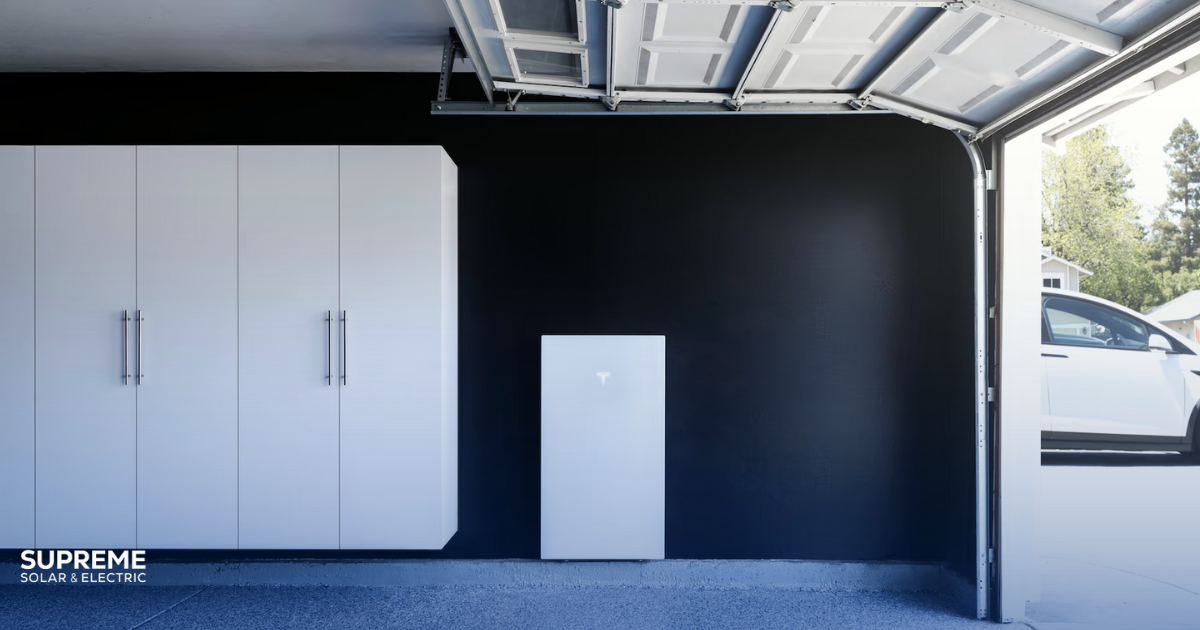
Homeowners across California, especially in Fresno and the Coachella Valley, are seeing a big shift in how they think about electricity. With utility rates rising faster than ever and rolling blackouts becoming more frequent, battery storage is no longer a luxury — it is quickly becoming a necessity.
The High Cost of Electricity in California
Let’s start with the problem. California’s utility rates are some of the highest in the country. Homeowners in Fresno are paying an average of 45 cents per kilowatt hour for electricity with PG&E. That is a massive increase over the last decade, and there is no sign of it slowing down.
For a typical homeowner using 1,200 to 1,500 kilowatt hours per month, that can mean bills of $500 or more — even higher in the summer. Without solar or batteries, you are essentially at the mercy of the utility company.
How the Tesla Powerwall 3 Solves That
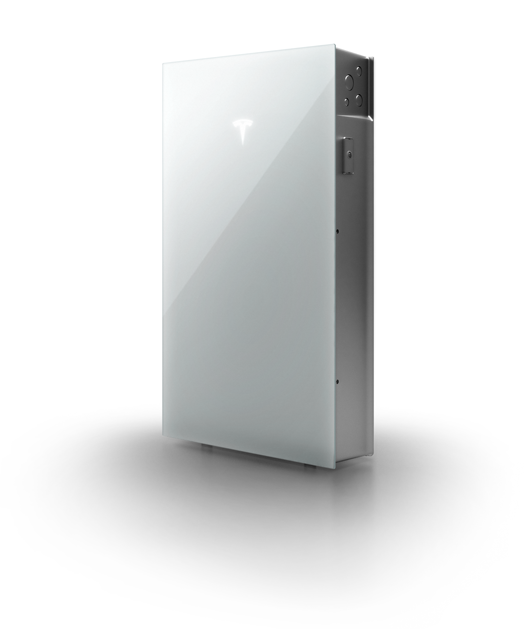 The Tesla Powerwall 3 is designed to store energy from your solar panels during the day and power your home at night. It can also take over when the grid goes down, giving you peace of mind during blackouts or outages.
Here is what makes the Powerwall 3 different:
- 13.5 kilowatt hours of capacity per unit
- 11.5 kilowatts of continuous power output
- LFP battery chemistry with long cycle life
- Up to 4 Powerwalls can be combined for 54 kilowatt hours of storage
- 6 MPPT inputs to maximize solar input
- 185 LRA motor start rating
- Tesla app integration for full monitoring and control
It is a fully integrated energy system that pairs perfectly with solar and gives homeowners control over their energy like never before.
What Does It Cost?
Let’s talk pricing. A full Tesla Powerwall 3 installation — including the battery, permit, electrical work, solar inverter integration, and backup switch or gateway — typically ranges between $45,000 and $60,000 before the 30 percent federal tax credit.
After the tax credit, many homeowners land closer to $35,500. That is for a full system with two Powerwalls, enough to back up the entire home and store solar power for nighttime use.
If you are expanding an existing solar system, a single Powerwall with Gateway 3 can be added on for about $20,000 to $25,000 installed, depending on site conditions.
Real-World Case Study
One of our recent customers in Clovis was paying around $575 per month to PG&E. After going solar and installing two Tesla Powerwalls, they brought their bill down to $240 per month with a fixed loan. That is nearly a 60 percent savings from day one.
Their system produces 100 percent of their annual energy needs and stores enough battery power to cover the entire home through the night. Plus, they now have whole home backup. If the power goes out, they stay on.
The payback period for their system is under six years, and they are protected from future utility rate hikes.
Whole Home Backup with the Tesla Backup Switch
Most of our customers prefer to install the Tesla Powerwall 3 with the Tesla Backup Switch. This device, also known as a meter collar, allows for full whole home backup without the need for a separate sub panel. It is a cleaner install and gives you the peace of mind that your entire home will stay powered during an outage.
If your utility allows it — and most in California do — this is the way to go.
Adding a Powerwall to an Existing Solar System
Already have solar? The Tesla Powerwall 3 can still be added to your system using the Tesla Gateway 3. This allows you to connect a battery to your existing setup and start storing solar power for nighttime use.
You will need to do some additional electrical work, and in some cases, a main panel upgrade. But for many homeowners, this is still a smart investment that boosts your savings and protects your home from outages.
Tesla App Integration
The Tesla app is one of the best in the business. It shows you exactly how your home is using energy in real time. You can see:
- How much power your solar panels are producing
- How much energy is being sent to your battery
- How much is being sent to the grid or used by your home
- How many outages you have experienced
- How much backup time you have left during an outage
It even sends you alerts when the power goes out and encourages you to conserve energy if needed. This kind of visibility and control is what makes Tesla’s ecosystem stand out from the rest.
The Future: Virtual Power Plants
Tesla is already piloting virtual power plant (VPP) programs in California. This means your Powerwall could someday allow the utility to draw stored power from your battery in exchange for payment. You would be helping to stabilize the grid and getting compensated for it.
While this is still in development, it is a big part of the future of home energy — and another reason why investing in a Tesla Powerwall 3 now makes sense.
The Only Downside: Shade
One thing to note about the Powerwall 3 is that it does not include per panel optimization. That means if your roof has shade issues or partial sun, you will need to make sure the system is designed properly with the right inverters and solar panels. In heavy shade conditions, another system may perform better.
But for most homeowners with good roof exposure, this is not a concern.
Is the Tesla Powerwall 3 Right for You?
If you live in the Central Valley or Coachella Valley and you are looking for energy independence, lower utility bills, and peace of mind, the Powerwall 3 is one of the best solutions on the market.
It pairs perfectly with solar, works with both new and existing systems, and provides unmatched control through the Tesla app. Plus, with the 30 percent federal tax credit still available, now is the best time to install one.
We expect this credit may not be around forever. There are already discussions about reducing or eliminating it, so waiting could mean missing out on thousands of dollars in savings.
Next Steps
If you are interested in seeing what the Tesla Powerwall 3 could look like for your home, reach out to our team at Supreme Solar and Electric. We will evaluate your home, review your usage, and provide a custom quote that includes solar, battery storage, and backup options.
We are a local company with teams in both Fresno and Palm Desert. We specialize in solar and battery systems that are built to last, and we handle everything in-house — from design to installation to service.
Click below to schedule a consultation or get a quote today. Let’s turn your home into a solar-powered microgrid and help you take control of your energy future.